
What Movers Will Not Move: A Clear Checklist
Know what movers will not move, why safety rules apply, and how to prepare restricted, fragile, and special items before moving day arrives. Plan ahead.
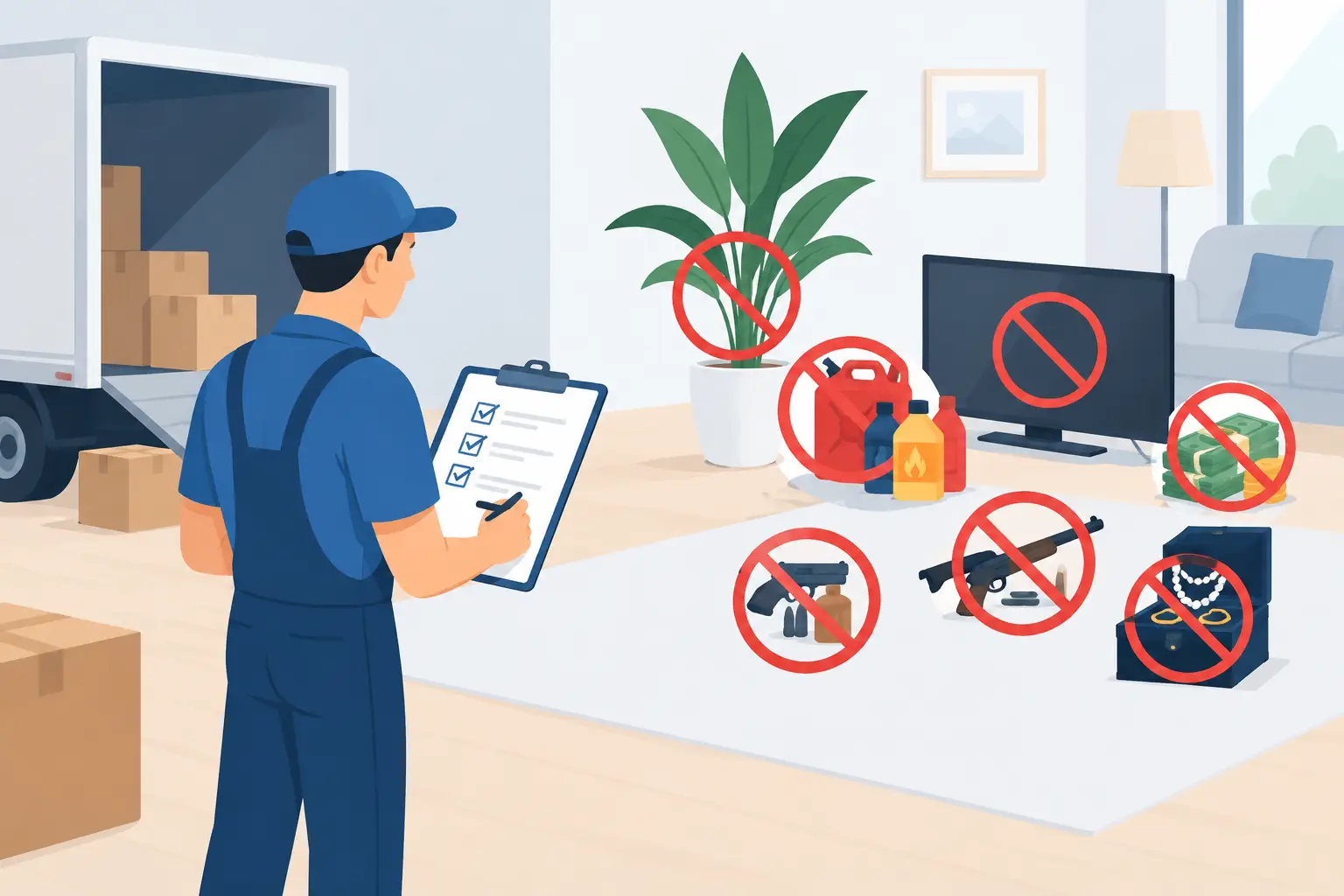
A moving truck is not a catch-all for every item in your home. Knowing what movers will not move before the crew arrives prevents last-minute decisions, delays, and the scramble of figuring out what to do with a box nobody can legally or safely load.
Most restrictions come down to one simple standard: if an item can create a fire risk, health hazard, legal problem, or preventable damage to your belongings, it usually cannot go on the truck. Policies can vary by company and by whether the move is local or long-distance, so always confirm unusual items during the quote process.
What Movers Will Not Move on Most Jobs
Hazardous and flammable materials
Professional movers generally cannot transport hazardous materials. Even a small leak inside a truck can damage furniture, create dangerous fumes, or put the crew and other customers' belongings at risk.
Common restricted items include gasoline, propane tanks, lighter fluid, fireworks, ammunition, paint thinner, solvents, bleach, pool chemicals, pesticides, aerosol cans, and fuel-powered equipment with fuel still inside. This also includes many household products people forget about, such as nail polish remover, certain cleaning supplies, charcoal, and camping fuel.
Gas-powered lawn mowers, snow blowers, generators, and similar equipment may be movable only after the fuel and oil have been properly drained. Do not assume an empty-looking fuel tank is enough. Ask ahead, especially when the item is going into a storage unit, moving container, or long-distance shipment.
For disposal, check local hazardous-waste collection options rather than placing chemicals in regular trash. If you are moving locally around Spokane, Coeur d'Alene, or Post Falls, using up products before the move is often the easiest plan.
Perishable food and open pantry items
Movers typically will not pack or transport perishable food. Refrigerated and frozen items can spoil quickly, leak onto other belongings, and attract pests. Take meat, dairy, produce, frozen food, and opened refrigerated condiments in a cooler if your drive is short. For a longer move, plan to use, donate, or discard them.
Dry, unopened pantry goods are different. Canned food, sealed snacks, and unopened dry goods may be acceptable for a local move, though they add weight fast. A box packed with canned goods is an easy way to create a damaged box or an unsafe lift. Keep food boxes small and clearly labeled.
Plants and live animals
Your pets should travel with you, not in a moving truck. Trucks are not climate-controlled living spaces, and loading schedules can change. The same goes for most live plants, especially on long-distance moves.
Some local movers may be willing to place hardy plants in a truck for a short move, but that is not a guarantee of safe transport. Plants can tip, freeze, overheat, or get damaged by shifting items. It depends on the season, distance, and available truck space. If a plant matters to you, carry it in your own vehicle whenever possible.
Items You Should Keep With You
Not every item is prohibited, but some belongings are too valuable, personal, or difficult to replace to hand over to a moving truck. Keep these with you in a clearly designated essentials bag or locked personal vehicle.
That includes cash, jewelry, passports, birth certificates, Social Security cards, prescription medication, financial records, house keys, computer backups, and sentimental keepsakes. If an item would create a major problem if it were lost for even one day, do not pack it into the truck.
The same rule applies to firearms. Laws, carrier policies, and storage requirements vary widely. Do not put firearms or ammunition in a moving truck without directly discussing the situation with the moving company and following all applicable laws. In many cases, the owner should transport firearms separately and securely.
For work moves, keep laptops, external drives, confidential files, and essential equipment with the person responsible for them. A moving crew can carefully handle office furniture and standard equipment, but sensitive business data needs a separate chain of custody.
High-Value and Specialty Items Need Advance Approval
Some belongings are not automatically off-limits, but they need to be discussed before moving day. A good mover would rather make a clear plan than discover a difficult item after the truck is loaded.
Safes, large gun cabinets, and heavy equipment
Heavy safes, commercial copiers, oversized fitness equipment, arcade machines, and industrial tools may require extra labor, specialty equipment, or a different service provider. The issue is not just weight. It is the path through the home, stairs, flooring, door clearances, and the ability to secure the item safely in transit.
Send photos and dimensions when requesting a quote. Include the estimated weight if you have it, along with details about stairs, elevators, narrow hallways, and steep driveways. Clear information leads to the right crew, truck, and equipment showing up prepared.
Pianos, hot tubs, and pool tables
Pianos and pool tables are common examples of items that may need specialty handling. Some moving companies can move certain types and sizes, while others refer them to dedicated specialists. Hot tubs usually require separate equipment and planning, and they must be fully disconnected and drained before anyone arrives.
Do not rely on a quick description like “small piano” or “standard pool table.” Photos, dimensions, and access details matter. A baby grand on a ground floor is a different job from an upright piano going down a narrow staircase.
Fragile collections and items of unusual value
Fine art, antiques, wine collections, large aquariums, delicate glass, and one-of-a-kind heirlooms are often movable, but standard packing may not be enough. Some pieces need custom crating, climate control, specialty valuation coverage, or direct transport by the owner.
Be honest about an item’s condition and value. A mover can plan for what they know about. If a piece already has a loose leg, cracked glass, or weak frame, point it out before loading so everyone understands the condition at pickup.
What to Do Before Moving Day
The easiest moving day is the one where restricted items are already handled. Walk through your garage, shed, basement, under-sink cabinets, and outdoor storage at least a week before the move. Those areas hold most of the items that cause surprises.
Separate anything flammable, corrosive, pressurized, perishable, or personally irreplaceable. Set aside a box or bin for items you will take in your vehicle. Then contact your mover with photos of anything unusually heavy, fragile, oversized, or hard to access.
A few practical details make a real difference:
- Empty, defrost, and dry refrigerators and freezers at least 24 hours before transport.
- Drain fuel from approved outdoor equipment according to the manufacturer’s guidance.
- Disconnect appliances, hot tubs, and electronics that require specialized service before the crew arrives.
- Secure loose parts, remove shelves when appropriate, and keep screws or hardware in labeled bags.
- Let the mover know about stairs, elevators, long carries, tight turns, and reserved parking needs.
This is not about making the job harder on yourself. It is about avoiding an avoidable problem when time is tight and the truck is waiting.
Why Moving Restrictions Protect Everyone
Restrictions can feel inconvenient, especially when you are trying to clear a house quickly. But they protect your home, your belongings, the moving crew, and everyone else sharing the road with the truck.
A propane tank left in a garage cabinet, a leaking bottle of cleaner, or an unreported 800-pound safe can turn a normal move into a safety issue. Clear communication gives your moving team the chance to provide the right answer before moving day, not after.
Move Forward LLC believes moving done right starts with straight answers. Tell us what you have, ask questions early, and we will help you build a practical plan that keeps the day moving without surprises.
Frequently Asked Questions
Will movers move alcohol?
It depends on the company, the move distance, and the amount. Sealed bottles may be accepted on some local moves, but movers may decline large collections, opened containers, or alcohol on long-distance moves. Ask before packing it.
Can movers move cleaning supplies?
Many ordinary sealed cleaning products may be acceptable, but products containing bleach, ammonia, solvents, or other hazardous chemicals may not be. Read labels and separate anything marked flammable, corrosive, toxic, or pressurized.
Can movers move a refrigerator?
Usually, yes. The refrigerator should be empty, defrosted, cleaned, and dry before moving day. If it has an ice maker or water line, have it disconnected in advance. Follow the manufacturer’s guidance on how long it should sit upright before plugging it back in.
Can movers move items from a shed or garage?
Yes, provided prohibited materials have been removed and heavy items were disclosed in advance. Garages and sheds are also where crews most often find fuel, chemicals, propane, and equipment that needs preparation.
A few minutes spent sorting these items before your move can save hours of stress later. When you are unsure about something, ask before moving day. A clear answer is always better than a last-minute surprise.