
Best Moving Supplies for Fragile Items at Home
Find the best moving supplies for fragile items, from glassware to TVs, plus practical packing tips that reduce breaks and moving-day stress in your home.
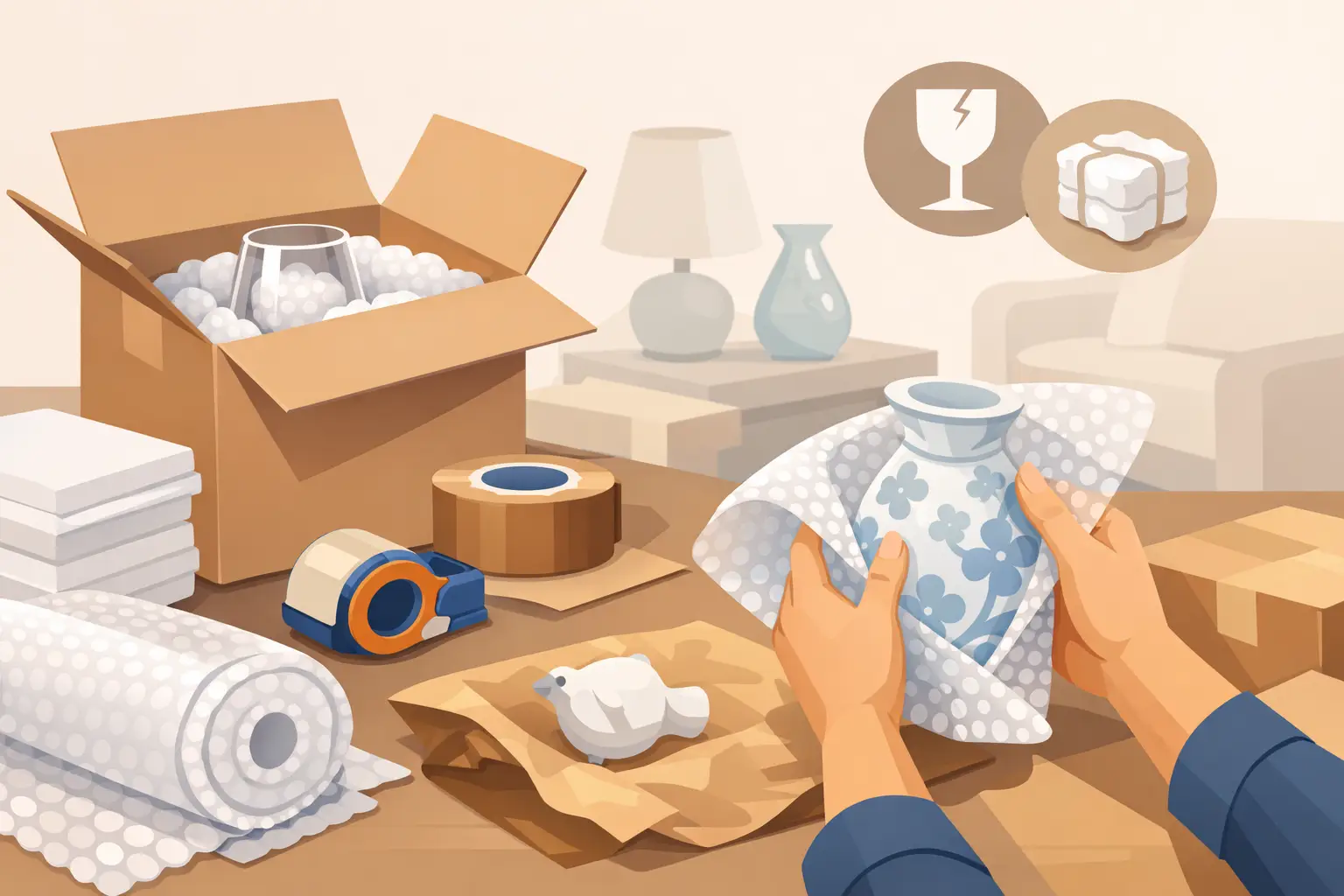
A box marked “fragile” is not a protection plan. If there is empty space inside, weak cardboard underneath, or a heavy box stacked on top, that label will not keep a wine glass, framed photo, or television safe. The best moving supplies for fragile items work together to stop shifting, absorb impact, and make sure boxes are handled correctly from the truck to the final room.
For most homes, you do not need specialty materials for every item. You do need the right supplies for the belongings that cannot take a bump, a drop, or pressure from another box. A little planning before packing day can prevent the kind of damage that turns an otherwise smooth move into a headache.
Start With Strong Boxes and the Right Sizes
A good box is the foundation of safe packing. Reused boxes can work for lightweight items if they are clean, dry, and still rigid. But for dishes, glassware, collectibles, electronics, and framed art, new boxes are usually the better call. Old cardboard loses strength quickly, especially when it has been stored in a garage, basement, or shed.
Small boxes are the best choice for dense, breakable items. A box of plates gets heavy fast, and an overloaded carton is harder to carry safely. Keep dishware, books, tools, and other weighty items in smaller boxes that one person can control without straining.
Medium boxes work well for lampshades, small appliances, and framed décor. Large boxes should be reserved for lighter fragile items, such as pillows used as filler, lightweight plastic items, or wrapped lampshades. The goal is a full box that is manageable, not a large box packed until it becomes a liability.
For certain belongings, purpose-built boxes are worth the cost. Dish-pack boxes have thicker walls and are made for glassware, china, and kitchenware. Wardrobe boxes can protect hanging clothes while freeing up towels and linens for padding elsewhere. Television boxes and picture boxes provide a better fit for flat-screen TVs, mirrors, and artwork than a random oversized carton.
The Best Moving Supplies for Fragile Items
The materials inside the box matter as much as the box itself. Start with clean packing paper. It is one of the most useful supplies on any move because it wraps glass, fills empty space, and cushions items without adding much weight. Unlike newspaper, it will not leave ink on dishes, glassware, or light-colored surfaces.
Bubble wrap is best reserved for items that need added impact protection: stemware, ceramics, electronics, small sculptures, and sentimental pieces. Wrap the item completely, tape the wrap lightly so it stays in place, and make sure the bubbles face inward against the item. That is where the cushioning does its job.
Foam pouches and foam sheets are useful for plates, bowls, picture frames, and flat items with finished surfaces. They are quick to use and help prevent scratches, but they should not replace proper box padding. A foam sleeve protects the surface. Packing paper or bubble wrap protects against movement and impact.
You will also want quality packing tape, not a thin roll that tears under tension. Use a tape gun if you are sealing several boxes. Reinforce the bottom seam of every fragile box with at least two strips of tape, then run one strip across the center seam. For heavier dish packs, use the H-tape method: tape the middle seam, then tape both outer edges so the bottom is fully supported.
Do not overlook labels and markers. Write the destination room, a short description of contents, and “FRAGILE” on more than one side. If a box must stay upright, mark “THIS SIDE UP” with arrows. Clear labels make it easier for everyone involved to place boxes properly instead of guessing at the curb, in the truck, or at the new home.
Other supplies can help in the right situation:
- Cardboard dividers keep glasses, mugs, and bottles separated inside dish-pack boxes.
- Corner protectors reduce pressure on framed artwork, mirrors, and furniture with delicate edges.
- Moving blankets protect large framed pieces, furniture, and appliances during loading.
- Stretch wrap holds blankets and protective pads in place without putting tape directly on finished surfaces.
- Plastic bins are useful for sturdy, non-breakable items, but they are not automatically safer for fragile belongings unless each item is wrapped and packed tightly.
Pack to Prevent Movement, Not Just Breakage
Most fragile items break because they shift inside the box. Start by lining the bottom with several crumpled sheets of packing paper. Do not flatten the paper. The loose shape creates a cushion that can absorb bumps.
Wrap each glass, mug, bowl, or dish individually. For glasses and stemware, place a sheet of paper inside the opening first, then wrap the outside. For plates, wrap them individually and pack them vertically on their edges, like records in a crate. Plates are stronger on edge than when stacked flat.
Build the box in layers. Put heavier wrapped items on the bottom and lighter pieces on top. Add crumpled paper between layers and around the sides. Before closing the box, gently move it side to side. If you hear or feel movement, add more filler. A correctly packed box should be full enough that nothing shifts, but not packed so tightly that the contents are under pressure.
Towels, bath mats, and clean linens can provide useful cushioning for low-risk items. They are not a substitute for packing paper around fine china, crystal, or electronics. Use them as a second layer of protection or as filler around already wrapped items.
Give Electronics, Art, and Mirrors Their Own Plan
Flat-screen TVs need more than a blanket draped over the screen. If you still have the original box and foam inserts, use them. If not, use a TV box sized for the screen, cover the screen with a soft clean cloth or foam sheet, protect the corners, and fill open space so the TV cannot slide.
Keep televisions upright during transport. Laying a modern TV flat can place unnecessary stress on the screen. The same goes for mirrors and framed artwork. Wrap the face, protect the corners, use a picture or mirror box when possible, and move those items upright between padded pieces of furniture or secured against the wall of the truck.
For computers, gaming systems, and other electronics, take a few photos of cable connections before disconnecting anything. Pack cords, remotes, screws, and accessories in labeled bags, then place those bags in the same box or keep them with your essentials. If an item has a hard drive or contains sensitive data, back it up before moving day.
Avoid the Packing Shortcuts That Cause Damage
Packing fragile belongings in trash bags is fast, but it offers almost no protection and makes it easy for items to be crushed. Using grocery bags as wrapping is another common shortcut that leaves gaps and provides little padding.
Do not put heavy items on top of fragile boxes just because the box closes neatly. Boxes should be loaded with the heaviest, most stable items on the truck floor and fragile cartons higher up, where they can be secured. A fragile box should never become the base of a stack.
It also helps to avoid vague labels such as “kitchen.” A box marked “Kitchen - Glassware - Fragile” tells you what it needs and where it belongs. That saves time when unloading and keeps you from opening every box just to find the coffee mugs on the first morning.
When Professional Packing Materials Make Sense
If you are moving a full house, have valuable art, or simply do not have time to pack every dish carefully, professional packing can be a practical choice. The trade-off is cost versus time and risk. For a small apartment, buying the basic supplies and packing carefully may be enough. For a larger move with antiques, a full kitchen, or several TVs, professional-grade boxes and experienced packing can be money well spent.
Move Forward LLC helps customers across the Inland Northwest with packing support as well as moving labor. Whether you pack yourself or hand off the fragile items, the standard should stay the same: no rushed packing, no loose boxes, and no guessing about what needs extra care.
Common Questions About Fragile Moving Supplies
Is bubble wrap better than packing paper?
Neither replaces the other. Packing paper is better for wrapping most dishes and filling empty space. Bubble wrap adds protection for delicate, unusually shaped, or high-value items. Use both when the item deserves extra protection.
How much packing paper should go in a fragile box?
Use enough to create a cushioned bottom, fill gaps between wrapped items, and form a soft top layer before sealing. The box should not rattle when moved, but the contents should not be forced together.
Can I use blankets instead of moving boxes for fragile items?
Blankets are excellent for protecting furniture, large artwork, and appliances. They are not a reliable replacement for boxes when packing glassware, dishes, or small breakables. Those items need structure as well as padding.
A careful move starts before the first box reaches the truck. Give fragile belongings the materials, space, and attention they need, and they are far more likely to arrive ready to use in the next place you call home.