
Packing Service vs Self Packing: Which Is Right?
Compare packing service vs self packing costs, time, and risk. Choose the right moving plan for your home, schedule, budget, and valuable belongings today.
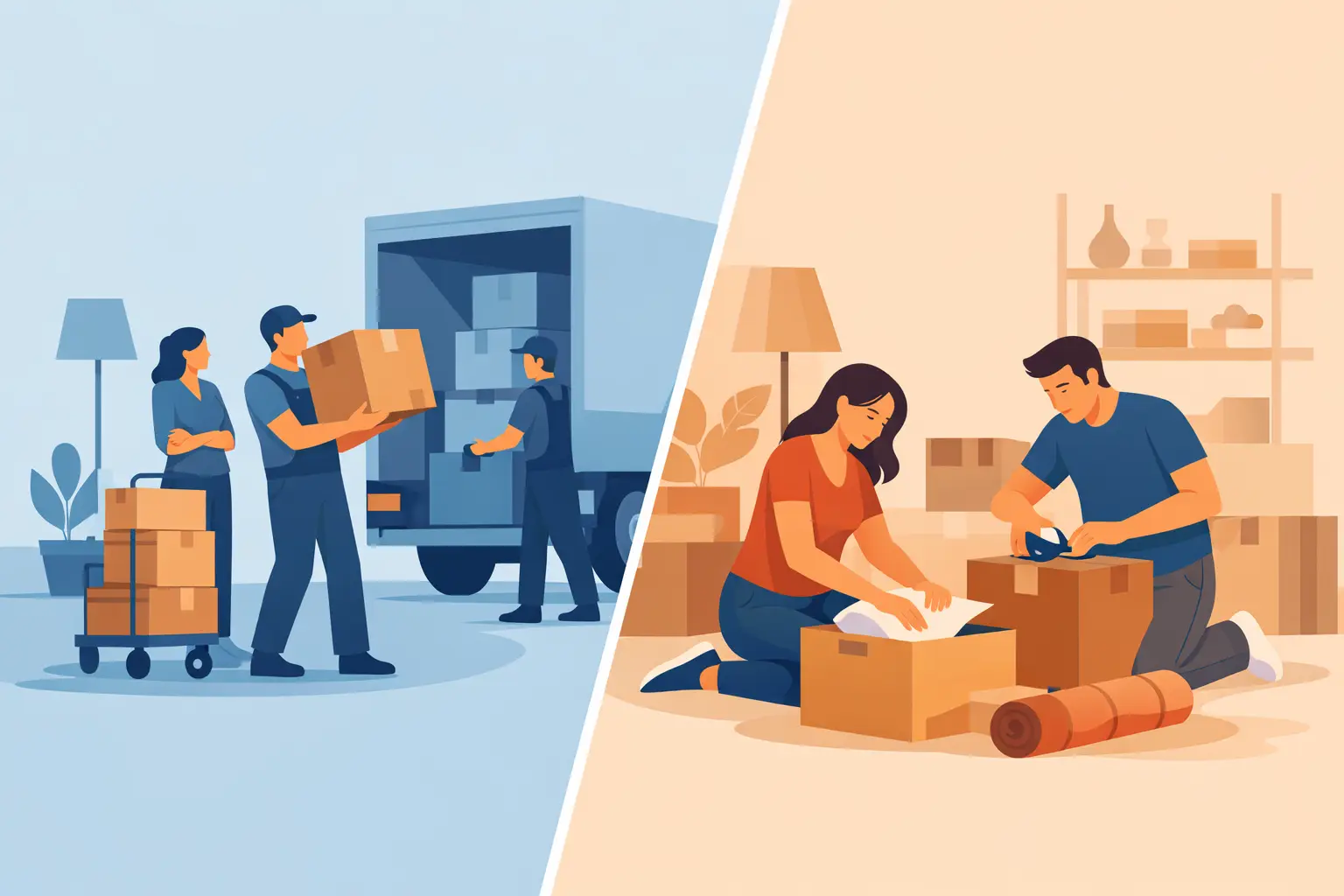
A move can look manageable until the boxes start taking over the living room. The real question behind packing service vs self packing is not simply who puts items in boxes. It is whether your time, energy, and belongings are better protected by handling the work yourself or bringing in trained help.
Neither option is automatically right for every move. A one-bedroom apartment with a flexible timeline is different from a four-bedroom home closing next Friday. The best choice comes down to your schedule, budget, the condition of your belongings, and how much work you can realistically take on before moving day.
Packing Service vs Self Packing: The Real Difference
Self packing means you gather supplies, sort every room, wrap fragile items, label boxes, and get everything ready before the movers arrive. You control the process from start to finish. For organized movers with enough time, that can be a good way to keep direct moving costs down.
A professional packing service puts trained packers on the job. They bring the right materials, pack room by room, protect furniture and fragile items, and prepare the home for loading. The main value is not just speed. It is knowing the packing is being handled with a system, especially when there are breakables, heavy items, or a deadline that cannot move.
The decision is usually less about whether you can pack and more about whether it is the best use of your remaining time. Packing a home properly takes longer than most people expect. Closets, kitchens, garages, storage rooms, and wall decor add up fast.
When Self Packing Makes Sense
Self packing is often a solid fit for smaller moves, simple households, and customers who can start early. If you are moving from a studio, a lightly furnished apartment, or a home where most items are already organized, packing on your own may be practical.
It also works well when you want maximum control over where everything goes. Some people prefer to pack their own clothes, personal paperwork, collections, or sentimental items. That is completely reasonable. You know what you use most and what needs to be available first at the new place.
The cost savings can be meaningful, but only if you account for the full picture. Boxes, tape, paper, bubble wrap, mattress bags, and specialty cartons are not free. Neither is a last-minute supply run when you discover the kitchen still needs twenty boxes.
Self packing is a better choice when you have at least a few weeks to work steadily. Packing a little at a time is far safer and less stressful than trying to finish an entire house over one weekend. Start with off-season clothes, books, decor, guest rooms, and anything you will not need before the move.
The risks of packing everything yourself
The most common self-packing problem is not a lack of effort. It is rushed packing. Boxes get overloaded, fragile items go into bins without enough padding, and labels become too vague to help anyone on move-in day.
A box marked “kitchen” may hold anything from plastic cups to heavy cookware and glass serving dishes. Clear labels matter. Write the room, a short description, and whether the contents are fragile. Keep box weights manageable, especially for books, dishes, and tools.
Some items also need more than a standard box. Mirrors, artwork, TVs, lamps, large framed pieces, and delicate electronics require careful protection. If you are unsure how to pack an item safely, getting help for that portion of the job can prevent an avoidable loss.
When a Professional Packing Service Is Worth It
Packing services make the most sense when time is tight or the move is complicated. That could mean a larger home, a family schedule packed with work and school, a long-distance relocation, an estate cleanout, or a business move where downtime costs money.
Professional packing can also be worthwhile if you have a lot of fragile or high-value items. Glassware, artwork, antiques, electronics, and specialty furniture need attention that goes beyond putting paper around them. Experienced packers know how to build stable boxes, protect edges and surfaces, and load items in a way that reduces shifting in transit.
For many customers, the biggest benefit is getting their home packed in hours or a day rather than stretching the work across several exhausting weeks. That lets you focus on address changes, utility transfers, closing details, kids, pets, and the other tasks that do not pause just because boxes need filling.
A packing crew should work with care, not just speed. Ask what materials are included, whether packing can be done by room or for the whole home, and how fragile items are handled. Clear answers before the job starts are a good sign that the plan will be clear on moving day too.
Partial packing is often the practical middle ground
You do not have to choose all or nothing. Partial packing is a smart option for customers who are comfortable boxing up clothes, linens, books, and everyday items but want help with the harder rooms.
Kitchens are a common choice because they take time and contain so many breakables. Garages, home offices, artwork, lamps, and large decorative items are also good candidates for professional packing. You handle the straightforward boxes and bring in help where the risk or workload is highest.
This approach can keep the budget under control without leaving you up late the night before the move, surrounded by half-packed cabinets.
Compare the Cost Beyond the Quote
Self packing usually costs less upfront because you are supplying the labor. But it still has a price: materials, fuel for supply runs, time away from work or family, and the chance that rushed or weak packing leads to damaged belongings.
Professional packing costs more because you are paying for labor, materials, and experience. The value is strongest when it prevents several days of disruption or protects items that would be costly to replace. It may not be necessary for every room, but it can be money well spent for the parts of the move that carry the most pressure.
Be honest about your available time. If packing yourself means taking multiple unpaid days off, delaying a closing task, or trying to pack after midnight for a week, the savings may not be as large as they first appear.
Questions That Help You Decide
Before choosing, consider the size of the move, the number of fragile items, your deadline, and the help you have available. Also consider your physical limits. Packing involves repeated bending, lifting, carrying, and climbing around closets, shelves, and storage areas. A move should not leave you hurt before the truck even arrives.
Ask yourself whether you can finish packing at least one day before your scheduled move. If the answer is no, professional or partial packing deserves serious consideration. Movers work more efficiently when boxes are sealed, labeled, and ready to load, and you avoid the stress of making decisions under pressure.
If you are using a rental truck, PODS, U-Box, or another container, skilled packing help can be especially useful. The load needs to be secure and balanced for transport, not simply placed wherever there is open space.
A Better Plan for Moving Day
Whether you pack yourself or hire help, keep a clearly marked essentials box with medications, chargers, documents, keys, toiletries, basic tools, and clothes for the first night. Keep valuables and irreplaceable personal records with you rather than sending them on the truck.
Set aside items that are not moving before packing begins. Donation piles, trash, and belongings going to friends should be separated from the moving inventory. This saves money, cuts down on clutter, and keeps movers from loading something by mistake.
For Spokane, Coeur d'Alene, Post Falls, and nearby moves, Move Forward LLC can build a plan around the level of help you actually need, from packing a few difficult areas to preparing the entire home. No surprises. Just solid work and clear communication.
The right choice is the one that leaves you ready when the truck arrives. If you have the time and a simple move, self packing can work well. If the workload is growing faster than your calendar allows, getting professional help is a practical way to protect your belongings and start the next chapter with less chaos.