
How to Pack Kitchen Glassware Without Breakage
Learn how to pack kitchen glassware with practical wrapping, box-loading, and labeling steps to help prevent chips, cracks, and moving-day surprises.
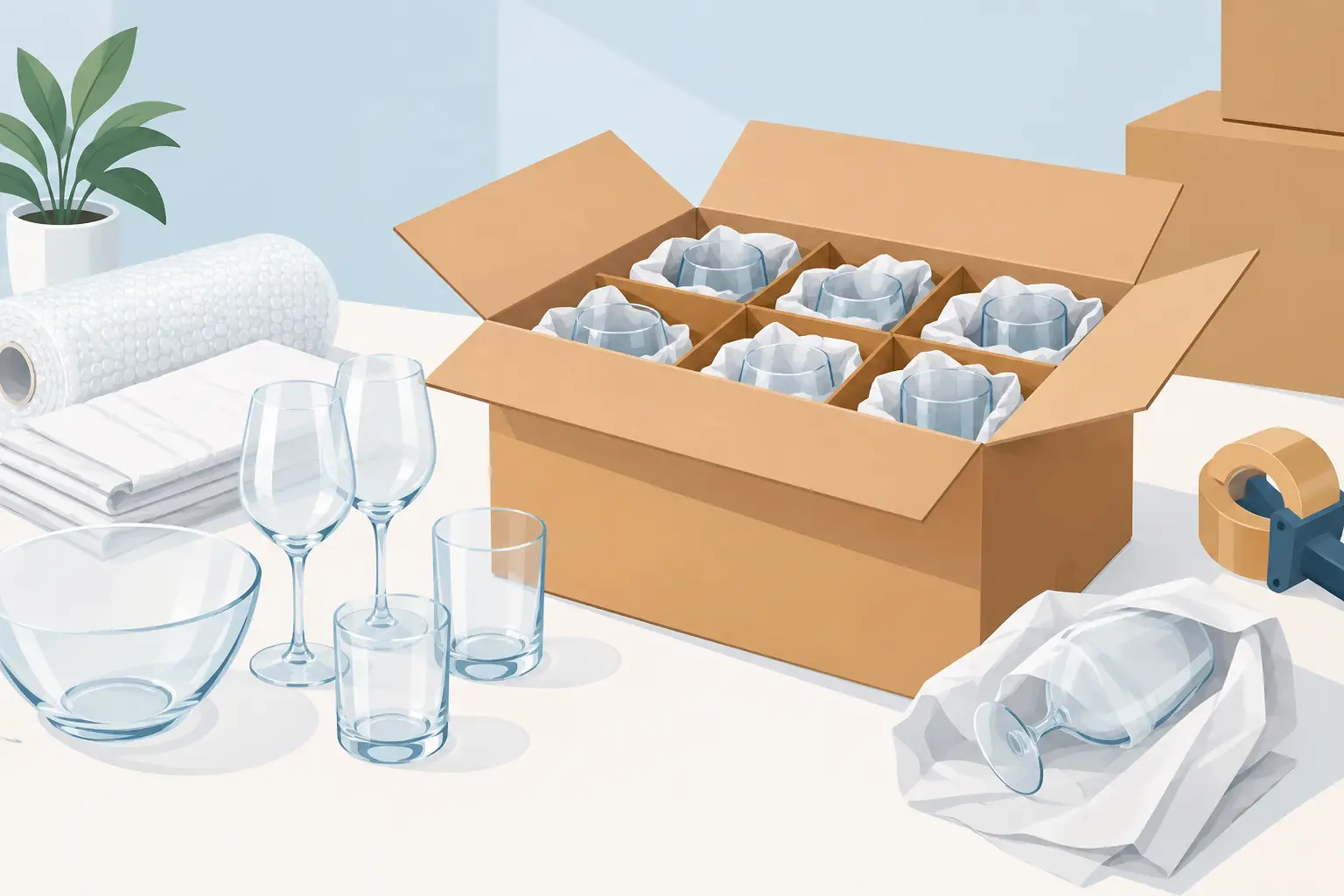
A box of kitchen glassware can look fine when it leaves the old house and still arrive with chipped rims, snapped stems, or a layer of broken glass at the bottom. The difference usually comes down to the packing method, not luck. Knowing how to pack kitchen glassware correctly means using the right box, enough paper, and a loading pattern that keeps pieces from shifting when the truck turns or stops.
Glassware takes time to pack because every item needs a little protection. That effort is cheaper than replacing a full set of wine glasses, serving bowls, or the everyday dishes your family uses every morning. Start early, work in small batches, and keep the packed boxes manageable.
Gather the right packing supplies first
Good packing starts with a sturdy container. Thin, reused grocery-store boxes are a gamble for glass, especially if they have soft corners, old moisture damage, or weak bottoms. Use small moving boxes for heavier glassware and medium boxes only for lighter items. A dish pack box, sometimes called a dish barrel, offers thicker walls and is a strong choice for fine china, crystal, and heavy serving pieces.
You will need clean packing paper, strong packing tape, a marker, and cardboard dividers if you have them. Bubble wrap is useful for stemware, decanters, and unusually shaped pieces, but plain packing paper should do most of the work. Avoid newspaper for items that may sit packed for a while. Ink can transfer onto clear glass, white dishes, and unglazed surfaces.
Before packing, reinforce the bottom of every box with several strips of tape. Run tape along the center seam, then add two strips across it. Put a thick, crumpled layer of paper in the bottom of the box to create a cushion. It is simple protection, but it matters when a box is set down harder than expected.
How to pack kitchen glassware one piece at a time
Work on a clean counter or table, not the floor. Keep the box nearby so wrapped items do not get bumped while waiting to be packed. Start with the heaviest pieces, such as large drinking glasses, mixing bowls, or thick mugs, and save delicate stemware for a separate box if possible.
For ordinary drinking glasses, lay one glass on its side near a corner of a sheet of packing paper. Fold one corner of the paper into the opening of the glass, then roll the glass forward until it is fully covered. Twist the remaining paper around the outside to hold the wrap in place. The paper tucked inside helps support the glass and protects the rim.
Wrap each glass individually. It can be tempting to nest several glasses and wrap them as one bundle, but glass rubbing against glass is where many cracks begin. If two items are designed to nest, such as certain measuring cups, place paper between every surface and make sure they cannot shift.
Give stemware extra support
Wine glasses, champagne flutes, and goblets need more than a quick wrap. First, lightly crumple paper and place it inside the bowl. Wrap the stem separately with a narrow strip of paper, then cover the entire glass with a full sheet of packing paper. Add bubble wrap around the bowl and stem if the item is thin, sentimental, expensive, or especially tall.
Do not pack stemware loosely in an oversized box. Use cardboard cell dividers when available, or build snug rows with crumpled paper between glasses. The goal is to stop side-to-side movement, not simply to make the box look full.
Pack plates, bowls, and mugs the right way
Plates travel better on their edges than laid flat in a tall stack. Wrap each plate separately, then place wrapped plates vertically in a small box, much like records in a crate. Add crumpled paper along the sides so the row stays upright. This spreads pressure more evenly and reduces the chance of a bottom plate carrying the weight of everything above it.
For bowls, place a sheet of paper between each piece, nest only similar-size bowls, and wrap the stack together after every bowl is protected. Large serving bowls should be packed on their own or with soft, lightweight items around them.
Wrap mugs individually, with extra paper around handles. Handles are the first part to break when mugs knock together. Place mugs upright in the box and fill empty space between them with paper.
Load the box in layers, not in a rush
The best wrapping job can still fail if the box is poorly loaded. Place heavier wrapped items on the bottom and lighter pieces on top. Keep glassware in tight, even layers, with paper filling every open gap. A box should feel full enough that nothing slides when you gently shake it, but not so tight that pieces press against one another.
After the first layer is in place, add a flat layer of crumpled paper before building the next one. Continue until the box is nearly full. Finish with a generous paper cushion at the top, then close the flaps. If the flaps bow upward, remove an item or rearrange the top padding. Forcing a box shut can put pressure directly on fragile pieces.
Do not make glass boxes too heavy. A packed dish barrel can become difficult to lift quickly, especially when it contains stoneware or thick glass. If you cannot carry the box comfortably with both hands, split it into two boxes. A smaller, well-packed box is safer for your belongings and the people moving it.
Label boxes so they are handled correctly
Write the destination room on at least two sides of the box, not only on the top. Add a clear note such as “FRAGILE - GLASSWARE - THIS SIDE UP.” Labels do not replace proper packing, but they help movers and family members place the box carefully and keep it upright.
If a box contains a specific set you will want right away, note that too. “Everyday glasses” or “Coffee mugs” makes unpacking easier after a long moving day. Keep a few essentials out of the moving boxes: two or three cups, basic plates, utensils, and anything needed for children, pets, or the first morning in the new home.
When loading the truck, place glassware boxes on a flat, stable surface. Never put them beneath furniture, appliances, or heavy book boxes. They should be secured against a solid wall or between soft, stable items so they cannot tip during transport. In a rental truck, this is one area where moving blankets and straps earn their keep.
Common glassware packing mistakes to avoid
Most breakage comes from a few preventable errors. Leaving empty space in a box allows items to gain momentum and collide. Overfilling a box creates pressure points. Using towels as the only protection can leave hard edges exposed, while packing every fragile item in one giant box makes the load too heavy to handle safely.
Another common mistake is mixing kitchen glassware with random household items. Metal utensils, canned goods, tools, and décor can shift against glass or add uneven weight. Keep fragile kitchen items together and pack non-breakable kitchen goods separately.
If time is tight, prioritize the pieces that are hardest to replace. Everyday glasses and basic plates are usually straightforward to pack yourself. Crystal, heirloom china, oversized serving platters, and delicate barware may be worth professional packing help, especially on a larger move. There is no prize for rushing through fragile items and opening a box of regrets later.
Check each box before it leaves the kitchen
Do a quick test before sealing the final box. Lift it a few inches and gently shift it side to side. You should not hear clinking, sliding, or loose movement. If you do, open the box and add more paper. That extra two minutes can prevent a broken-glass cleanup at the other end.
For homeowners and renters preparing for a move around Spokane, Coeur d'Alene, or nearby communities, a careful packing plan takes pressure off moving day. Move Forward LLC can handle packing support when your schedule is full or the fragile items are more than you want to manage alone.
Pack one cabinet at a time, protect the empty spaces as carefully as the glass itself, and give every box a clear destination. That is how glassware arrives ready for the next kitchen, not the trash bin.