
Can Movers Move Safes? What to Know First
Can movers move safes safely? Learn when standard moving crews can help, what affects cost, and how to prepare your safe for a secure move with less risk.
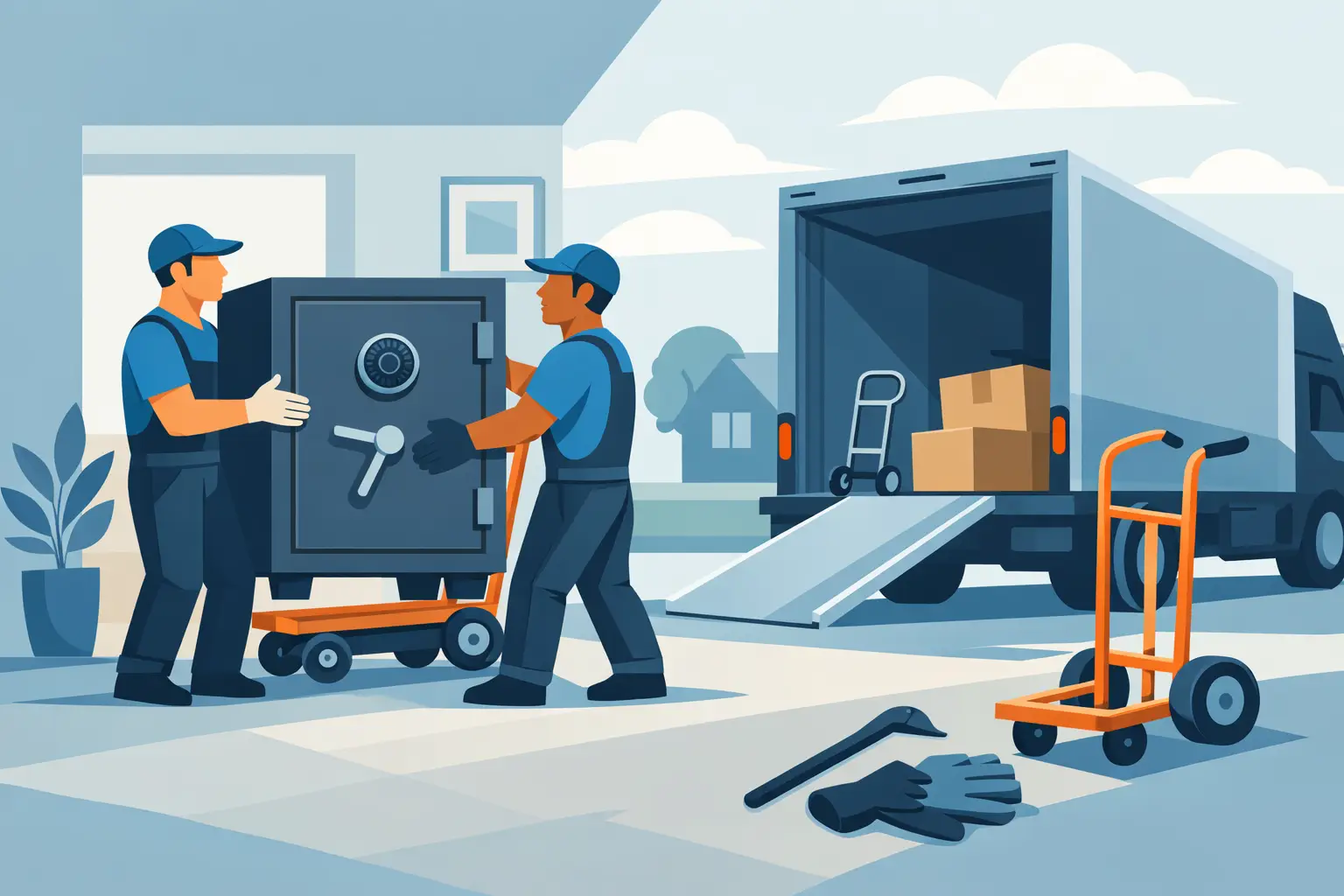
A safe may look like one item on a moving list, but it can change the plan for the entire day. So, can movers move safes? Often, yes. But the right answer depends on the safe’s weight, size, location, access route, and the equipment required to move it without damaging the safe, your home, or anyone involved.
A small fire safe on a ground-floor shelf is one thing. A 900-pound gun safe in a basement with a tight stairwell is another job entirely. The difference matters. A professional mover should ask the right questions before giving you a firm answer, not show up and hope for the best.
Can Movers Move Safes Safely?
Professional movers can move many safes when the job fits their equipment, crew size, training, and insurance coverage. Heavy-item moves take planning. The crew may need appliance dollies, straps, floor protection, ramps, lifting tools, and enough trained hands to control the load from start to finish.
Not every moving company handles every safe. Some companies have weight limits. Others do not move safes over a certain size, safes requiring stair carries, or safes bolted to concrete. In those situations, a dedicated safe-moving specialist may be the better choice.
That is not a refusal to help. It is good judgment. Safes are top-heavy, extremely dense, and difficult to grip. A bad angle on a staircase can damage flooring, walls, railings, and the safe itself. More importantly, it can put people at serious risk.
At Move Forward LLC, clear communication comes first. If a safe is part of your move, mention it early so the job can be scoped correctly and the crew can arrive prepared.
What Determines Whether Your Safe Can Be Moved?
The weight listed by the manufacturer is a starting point, not the full picture. A safe may weigh far more once firearms, ammunition, documents, jewelry, shelving, or other contents are inside. Its path out of the house can be just as important as its weight.
Safe type and weight
Small document safes and compact fire safes are commonly within the range of a standard moving crew. Larger gun safes, commercial safes, antique safes, and high-security models often require specialized planning. A safe that weighs several hundred pounds may still be manageable on a level, wide path. Add stairs, sharp turns, snow, gravel, or a steep driveway, and the job changes quickly.
If you do not know the weight, look for a manufacturer label inside the door, on the back panel, or in the original paperwork. Send the mover the make and model if possible. A photo with a rough measurement is also useful.
Stairs, turns, and access
A ground-floor move through a wide doorway is usually more straightforward than a basement or second-story move. Movers need to know how many steps are involved, whether there are landings or turns, and if the route has narrow halls or low ceilings.
Do not estimate access based on whether a person can walk through the space. A safe on a dolly needs considerably more room. Exterior access matters too. Wet grass, icy walkways, loose gravel, and uneven pavers can all affect the safest route.
Bolt-downs and installation details
Many safes are bolted to concrete or anchored to a floor. Movers may be able to transport a safe once it has been professionally detached, but removal of bolts is a separate service and may not be included in a standard moving job.
If your safe has an alarm, electrical connection, dehumidifier rod, biometric lock, or wall anchor, disclose that before moving day. Some components should be disconnected or serviced by the installer, locksmith, or manufacturer first.
How to Prepare a Safe for Moving Day
A prepared safe is safer to move and faster to load. Start by removing all contents. This reduces weight and prevents internal shelves, drawers, or valuables from shifting during transport. Keep firearms and ammunition separate, secured, and handled according to all applicable laws and your mover’s policies.
Lock the safe before the crew arrives, but make sure you retain the keys, combination, backup key, and any override instructions. Do not tape over a keypad or leave a key inside the safe. If the door needs to be secured for transport, ask the mover what they recommend. Some safe doors can swing open unexpectedly if they are not properly latched.
Clear the full route from the safe to the truck. Move rugs, furniture, decorations, and anything that could create a tripping hazard. Protect fragile corners or tight wall sections if the route is especially narrow. Outside, clear snow and ice, secure pets, and make sure there is close parking available for the moving truck.
Photos help more than most people realize. Send clear pictures of the safe, the room it is in, every stair section, the exterior exit, and the destination path. Honest information upfront prevents last-minute changes, added labor, or a job that cannot be completed safely.
What Does It Cost to Move a Safe?
Safe-moving costs vary because the labor and risk vary. A compact safe moved across a level home may require only additional labor time. A large safe that needs specialized equipment, multiple movers, stair work, or a separate transport plan will cost more.
The biggest cost factors are weight, access, distance, crew size, equipment, and whether the safe is moving as part of a full household move or as a single-item job. Long carries and stairs generally add time. Specialty safe movers may price the job as a flat rate after reviewing photos and access details.
The best quote is not always the lowest number. Ask what is included, whether stair carries are covered, what equipment will be used, and what happens if the actual conditions differ from the information provided. Clear pricing is better than a vague estimate that changes when the crew arrives.
When a Safe Specialist Is the Better Call
Standard movers are a strong option for many straightforward safe moves. A safe specialist is usually the smarter choice when the safe is exceptionally heavy, must travel up or down difficult stairs, needs to be removed from a basement, is bolted down, or requires a crane, stair-climbing machine, or other specialized equipment.
You may also want a specialist for high-value antique safes, commercial safes, vault doors, and safes with complex lock or alarm systems. These jobs can involve more than lifting. They may require technical knowledge that protects the mechanism and preserves the safe’s value.
Be cautious with anyone who says they can move a heavy safe without asking about weight, stairs, or photos. A professional will want details before committing. They should also be willing to explain the plan in plain language.
Questions to Ask Before Booking
Before you hire anyone, confirm that the company knows it is moving a safe and has reviewed the access route. Ask whether it has a safe weight limit, whether stairs are allowed, and whether the crew will bring the necessary moving equipment.
It is also reasonable to ask how floors, doors, and walls will be protected. Moving a safe is not just about getting it from point A to point B. It is about controlling the move at every point in between.
Can movers move a gun safe with firearms inside?
That is generally a bad idea. Empty the safe before moving day. Removing the contents lowers the weight, prevents shifting, and avoids unnecessary safety and legal concerns. Confirm the moving company’s policy ahead of time.
Can movers move a safe upstairs?
Sometimes, but it depends on the safe’s weight, stair width, turns, structure, and available equipment. An upstairs safe move should always be discussed in advance. Never assume a crew can safely carry it up stairs just because it fit through the front door.
Should I try to move a safe myself?
For a very small safe, you may be able to handle it with proper help and equipment. For anything heavy, tall, or stair-bound, it is not worth the gamble. Safes can cause serious injuries and costly property damage in a few seconds.
A safe deserves a real moving plan, not a last-minute lift. Share the details early, choose a crew equipped for the conditions, and give the move the same care you would give the items stored inside.