
PODS vs Moving Truck Labor for Your Move
Compare PODS vs moving truck labor for your next move. See costs, timing, loading needs, and when skilled movers make the better choice for your budget.
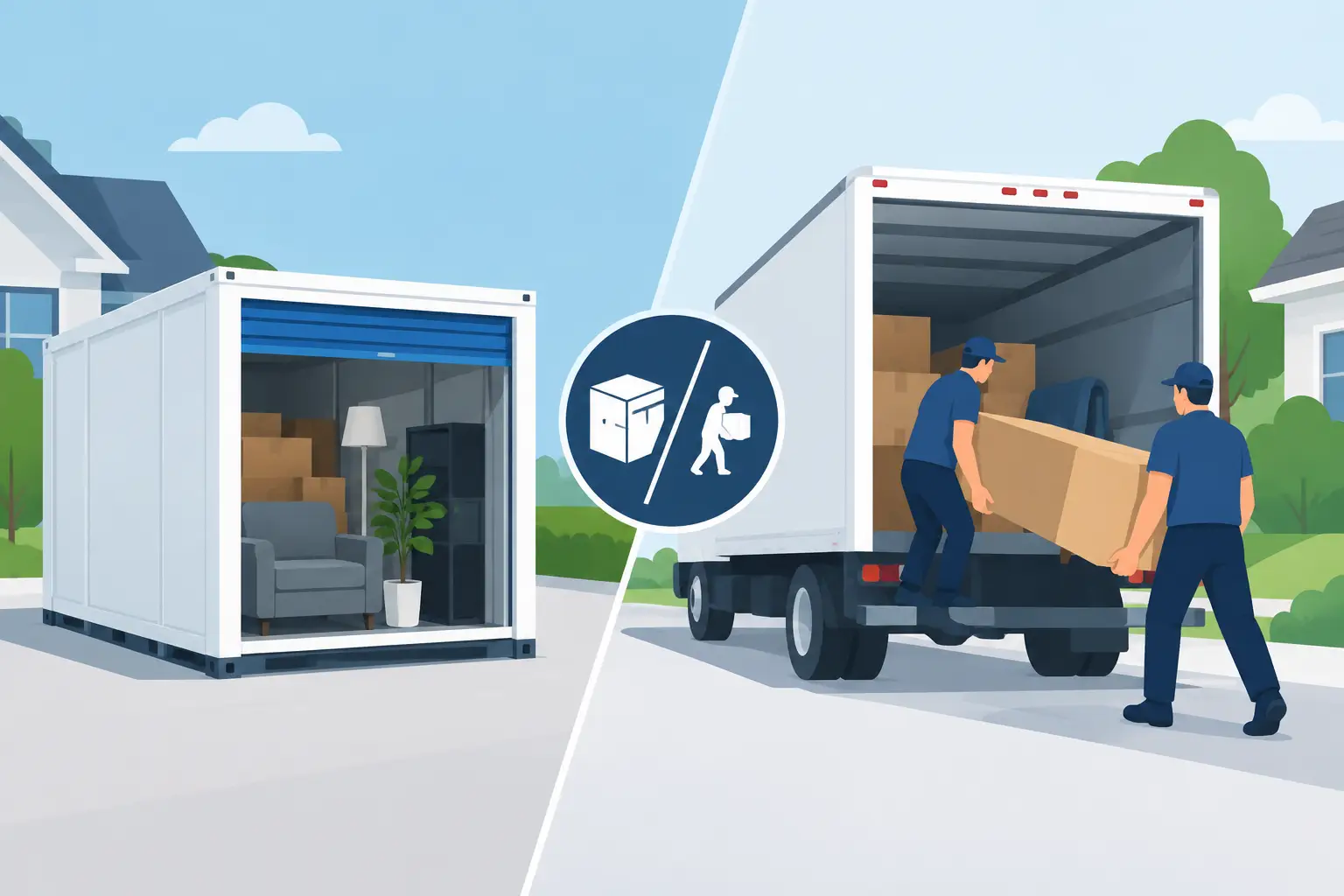
A container in the driveway can look like the easy answer. So can a rented truck. But the real decision in PODS vs moving truck labor is not just about what holds your belongings. It is about access, time, physical work, and how much control you want over moving day.
For many Spokane and North Idaho moves, the best plan is not an all-or-nothing choice. You may rent the equipment yourself and hire experienced movers for the heavy lifting, careful loading, and hard-to-manage pieces. That keeps the move flexible without leaving you to figure out how to load a couch, appliances, and boxes safely on your own.
PODS vs Moving Truck Labor: The Main Difference
A PODS-style portable container is delivered to your home, loaded over a period of days, and then picked up for delivery or storage. It is built for people who need time. You can pack room by room, keep the container on-site while you sort, and avoid doing everything in one long day.
A moving truck rental is usually a tighter schedule. You pick it up, load it, drive it, unload it, and return it within the rental window. When you add moving labor, a trained crew handles the loading and unloading while you keep control of the truck, route, and rental terms.
Neither option is automatically cheaper or better. A portable container can make sense when your move has a gap between homes or you need temporary storage. A truck with labor often makes more sense for a local move that needs to happen efficiently, especially when you have a clear move-out and move-in date.
When a Portable Container Makes Sense
Portable containers work well when time is the biggest issue. Maybe your new home is not ready yet, you are selling before buying, or you are downsizing and need a place to keep belongings while you decide what stays. A container gives you a buffer that a one-day truck rental does not.
It can also be a solid choice for some long-distance moves. You avoid driving a large rental truck across several states, and the container provider handles transportation. That may be worth the added cost for customers who are not comfortable driving a loaded truck through mountain passes, city traffic, or unfamiliar areas.
The trade-off is access. A container needs a practical place to sit. Driveways, apartment lots, narrow streets, HOA rules, and city requirements can all affect whether delivery is possible. In some neighborhoods, you may need approval or a permit before placing a container on the street. If the driver cannot place it close to your door, every extra foot becomes more carrying for the people loading it.
Container loading also requires a plan. Furniture needs to be wrapped, heavy items need to stay low, and weight must be distributed from front to back. A poorly loaded container can shift in transit, even if it looked fine when the doors closed.
When a Moving Truck With Labor Is the Better Fit
For a straightforward local move, a rental truck and professional labor is often the cleaner option. The crew arrives, protects the home, loads the truck in the right order, secures the furniture, and unloads at the new address. You are not paying for days of container use when the work can be completed in a scheduled window.
This setup is especially useful when you are moving between Spokane, Spokane Valley, Liberty Lake, Coeur d'Alene, Post Falls, or another nearby community. Shorter travel distance means the truck can often be loaded and unloaded the same day. You get a focused moving day instead of having a container sitting outside while the job stretches on.
Truck labor is also more flexible for moves with extra stops. If you need to pick up a sectional from storage, collect items from a family member's home, or make a furniture delivery before heading to the new place, a truck can follow the plan. Portable containers are less adaptable once they have been scheduled for pickup.
The main responsibility on your side is the rental agreement. You will need the right truck size, insurance coverage that makes sense for your situation, and a return plan. A good moving crew can help you estimate the space you need, but the truck reservation and driving remain yours.
What Actually Drives the Cost
The sticker price rarely tells the whole story. With a portable container, costs can include delivery, pickup, transportation, monthly storage, mileage or distance charges, and protection plans. If your dates change, storage may become necessary whether you planned for it or not.
With a rental truck, the costs usually include the truck rate, mileage, fuel, insurance options, and labor. For local moves, fuel and mileage may be manageable. For long-distance moves, they can add up quickly, particularly if you need more than one trip.
Labor is where spending can either protect your budget or create a mess. Skilled loaders can fit more into the available space, reducing the chance that you need a second truck or container. They can also move large furniture without scraping walls, damaging stair rails, or turning a small injury into an expensive delay.
The least expensive option is not always the one with the lowest initial quote. A cheap rental becomes costly when the truck is too small, the move takes an extra day, or a damaged dresser needs to be replaced. Clear pricing and a realistic plan matter more than a number that looks good before the work starts.
Loading Labor Is Worth Considering for Heavy or High-Risk Items
If you are comfortable packing boxes but not moving a washer, safe, solid-wood bedroom set, or oversized sectional, labor-only help can be the right middle ground. You supply the container or truck. The movers bring the muscle, moving equipment, and loading experience.
This is also useful for apartment moves with stairs, tight turns, elevators, or long walks from the building to the parking area. Those conditions can turn a simple move into a job that takes far longer than expected. The equipment may be rented, but the labor should still be planned around the actual access at both addresses.
Before booking help, be ready to share the truck or container size, the number of bedrooms or major items, stair and elevator details, parking limitations, and any especially heavy pieces. Good information upfront leads to the right crew size and a more accurate labor estimate. No surprises. Just solid work.
Questions to Ask Before You Choose
Start with your timeline. If you need several days or weeks to load, store, or coordinate closing dates, a portable container may give you breathing room. If both homes are available and you want the move completed quickly, a truck with labor may be more efficient.
Then look at access. Can a container be placed legally and safely near your home? Can a rental truck park close enough for an efficient load? A long carry, steep driveway, or crowded apartment complex can change the answer fast.
Finally, be honest about the work you want to take on. Driving a rental truck, lifting furniture, and securing a load are different jobs. Some customers want to handle every part themselves. Others want control of the equipment but prefer a dependable crew to do the work that can cause damage, delays, or injuries.
Common Questions About PODS and Truck Labor
Can movers load a PODS-style container?
Yes. Labor-only movers can load a portable container you have arranged. Professional loading is useful because the container must be packed tightly and balanced for transport, not simply filled until the door closes.
Is a moving truck cheaper than a portable container?
It can be, particularly for local moves completed in one day. A container may be worth more when you need storage time or do not want to drive. Compare the full cost, including fuel, mileage, delivery fees, storage, and labor.
Should I load my own truck and hire movers only to unload?
You can, but loading is where many problems begin. Proper stacking, furniture protection, and tie-downs help prevent shifting and damage during the drive. If your budget allows for only one side of the move, loading help is often the smarter place to use it.
A move does not have to fit a prepackaged option. Choose the equipment that works for your dates and distance, then get the level of help that keeps the job safe, organized, and on schedule. If you need capable hands for your truck or container, Move Forward LLC can build a labor plan around the move you are actually making.