
How to Protect Floors During Moving Without Damage
Learn how to protect floors during moving with smart prep, proper coverings, and loading habits that prevent scratches, stains, and expensive repairs.
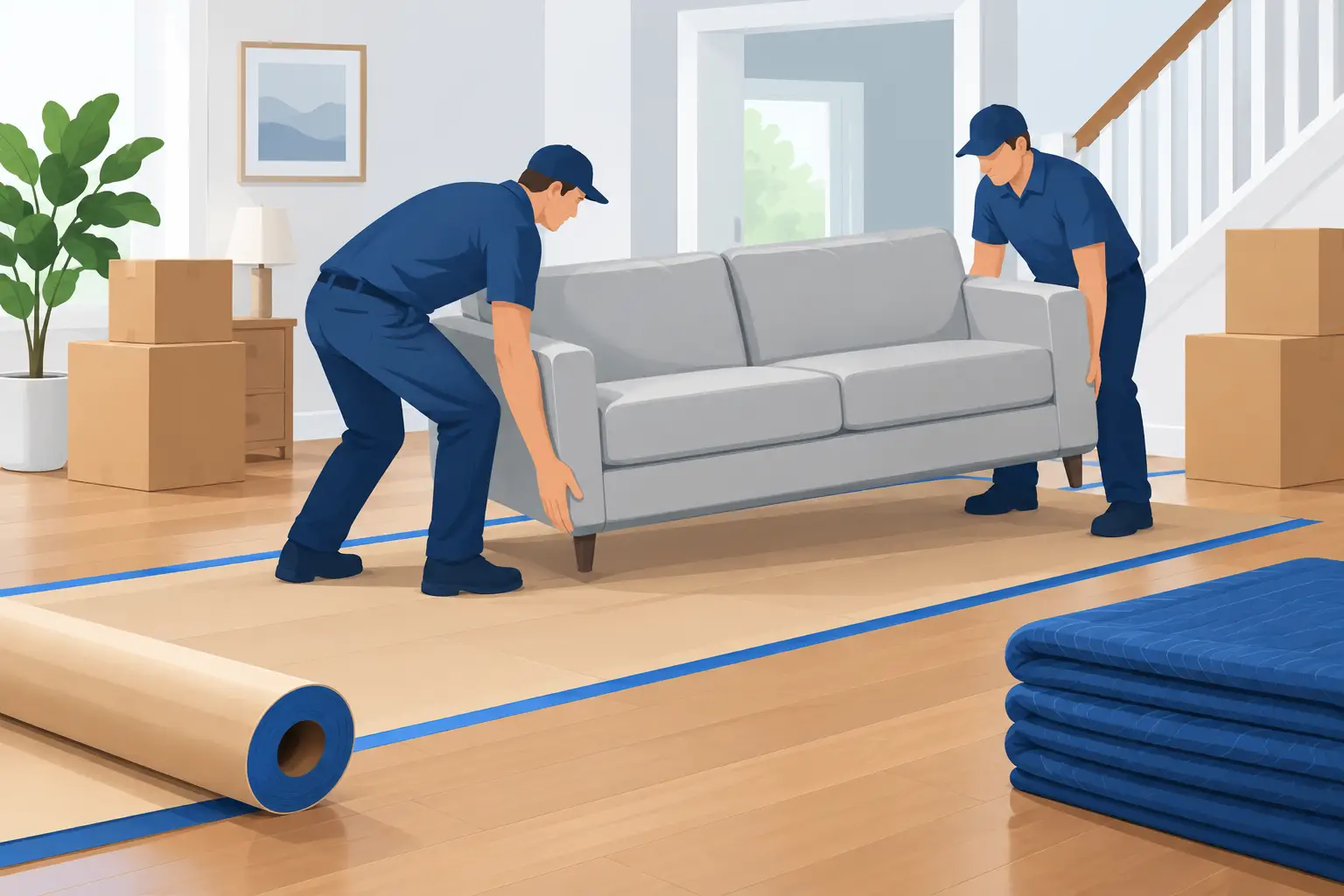
A moving day can go smoothly right up until a sofa leg catches the hardwood, a wet shoe crosses new carpet, or a loaded dolly leaves a black mark on vinyl plank. Knowing how to protect floors during moving is not about buying every protective product available. It is about covering the right paths, using the right equipment, and keeping the crew organized from the first box to the final walkthrough.
Floor damage is frustrating because it is often preventable. A few minutes of preparation can save you from cleaning fees, repair bills, and an awkward handoff with a landlord or buyer.
Start with the route, not the furniture
Before anything comes out of the house, walk the path from each room to the truck. Identify every surface that will take traffic: entryways, hallways, stairs, corners, and the route through the garage or driveway. Then look for the trouble spots. Light-colored carpet, newly refinished hardwood, luxury vinyl plank, tile grout, and freshly painted baseboards all deserve extra attention.
The shortest route is not always the safest one. If the direct path requires tight turns around a hardwood corner or repeated trips over a wet threshold, a slightly longer route may reduce the risk. Make sure doors are fully open, rugs are removed or secured, and loose cords or clutter are out of the way before the first load moves.
This matters just as much at the destination. People tend to focus on protecting the home they are leaving, then walk into a new house with muddy shoes, dirty wheels, and no clear traffic plan. Set protection down at both locations before unloading begins.
Choose floor protection for the surface
No single covering works perfectly on every floor. The goal is to create a clean, non-slip barrier that stays in place under foot traffic and equipment.
Hardwood, laminate, and vinyl plank
For hard floors, use clean moving blankets, padded runners, or purpose-made floor runners along the main path. Avoid placing plastic directly on some wood and laminate floors for long periods, especially in warm or humid conditions. Moisture can become trapped underneath, and certain tapes or coverings can affect the finish.
Keep furniture pads clean. A pad that has been dragged through a driveway can carry grit inside, turning a protective layer into sandpaper. Secure runners at the edges when necessary, but do not put aggressive tape directly on a delicate finish. Low-tack painter's tape is often the safer choice when it can be used on an adjacent surface.
Carpet and rugs
Carpet protection is about dirt, moisture, and snags. Heavy-duty carpet film works well for a short move when applied to clean, dry carpet. It creates a clear walking lane and is especially useful near entry doors and hallways. Do not use it on wet carpet, and do not leave it down longer than the manufacturer's guidance.
For a smaller move, clean runners or moving blankets can be enough. The key is making sure the material does not bunch up under a dolly or become a tripping hazard. Roll up area rugs before moving begins. A rug that shifts under a loaded dresser can cause a fall and damage both the floor and the furniture.
Tile, stone, and concrete
Tile and stone hold up well to normal foot traffic, but they are vulnerable at edges, grout lines, and slick surfaces. Use runners to limit dirt and improve traction. If there is rain, snow, or mud outside, add a staging area at the entrance where shoes and dolly wheels can be wiped before coming inside.
Concrete garage floors can leave dust, oil, and grit on furniture pads and wheels. Keep a clean set of pads for interior use when possible. It is a simple detail that makes a real difference on finished floors.
Use the right equipment and use it carefully
Most floor damage comes from rushed handling, not the weight of the item alone. Dollies, hand trucks, and furniture sliders are useful, but they need to match the job.
A four-wheel furniture dolly spreads weight across a wider surface and works well for boxed items, appliances, and large furniture. A hand truck is useful for tall or stacked loads, but its small wheels can leave marks or dent soft flooring if it is pulled carelessly. Check wheels before bringing equipment inside. Remove gravel, mud, and debris, then make sure the tires are inflated and rolling freely.
Furniture sliders can help move heavy items across hard surfaces, but they are not a free pass to drag anything anywhere. Use sliders designed for the floor type, keep the path clear, and lift enough to place them correctly. Never drag a loaded appliance, bed frame, or desk across a floor without proper protection underneath.
Pay close attention to furniture feet. Remove or secure sharp metal glides, exposed nails, and damaged pads before moving an item. For heavy furniture that will be set down temporarily, place it on moving pads rather than directly on a protected walkway. That prevents pressure marks and keeps the item stable.
Keep outside dirt from becoming inside damage
Weather changes the plan. Spokane and Coeur d'Alene moves can mean rain, slush, dust, or tracked-in gravel depending on the season. The right floor protection will not help much if every person and dolly wheel brings debris through the front door.
Set up a simple clean zone at each entrance. Keep towels, a broom, and spare pads nearby. Wipe wet shoes and dolly wheels as needed instead of waiting until the floor is already dirty. If conditions are especially messy, assign one person to manage the entrance and replace wet or dirty coverings during the move.
Do not leave wet blankets on wood, laminate, or carpet. Swap them out promptly. It takes more supplies, but it is cheaper than dealing with water marks, soaked carpet padding, or a damaged floor finish.
Pack and stage with floor safety in mind
Protection starts before lifting. Pack boxes so they can be carried securely without being dragged or dropped. Do not overload boxes to the point that the bottom bows out. A broken box can spill sharp objects, scrape flooring, and slow down the whole move.
Create a staging area close to the exit, but do not block the protected route. Keep heavy pieces in a clear area where movers can get a solid grip and make a direct carry to the truck. Crowded hallways lead to bumped walls, pivoted furniture, and last-second adjustments that damage floors.
If you are moving yourself with friends or hiring labor-only help for a rental truck, agree on the route before the work starts. Everyone should know which doors to use, where to set items down, and which areas are off limits. Clear communication is one of the best protections you can put in place.
How to protect floors during moving with professional help
A dependable moving crew should treat home protection as part of the job, not as an add-on after damage has already happened. Before moving day, ask what floor protection they use, how they handle wet-weather conditions, and whether their equipment is cleaned before entering the home.
You should also point out fragile flooring, recent renovations, and any areas where access is tight. Professional movers cannot protect what they do not know about. A quick walkthrough at the start of the move sets expectations and gives the crew a chance to adjust the plan.
At Move Forward LLC, careful home protection, clear communication, and a final walkthrough are part of moving done right. The goal is simple: get your belongings where they need to go without leaving your floors as the cost of the move.
Do a final walkthrough before the truck leaves
Once the last item is loaded, remove floor coverings slowly and inspect the main route. Look for grit, moisture, tape residue, or marks that need immediate attention. It is easier to wipe a fresh scuff or clean tracked-in dirt right away than after it has been ground into carpet or left sitting on a floor finish.
Check corners, door thresholds, stair landings, and the areas where furniture was staged. Then repeat the same process after unloading at the new location. A careful final walkthrough gives you a clean handoff, a clearer record of the home's condition, and one less moving-day surprise.
The best floor protection is not complicated. Plan the path, keep materials clean, slow down around tight spots, and treat every room like it matters. That is how a move stays efficient without leaving damage behind.