
How to Move Heavy Furniture Safely
Learn how to move heavy furniture safely with practical steps, the right tools, and when to call movers to avoid damage, injury, and stress.
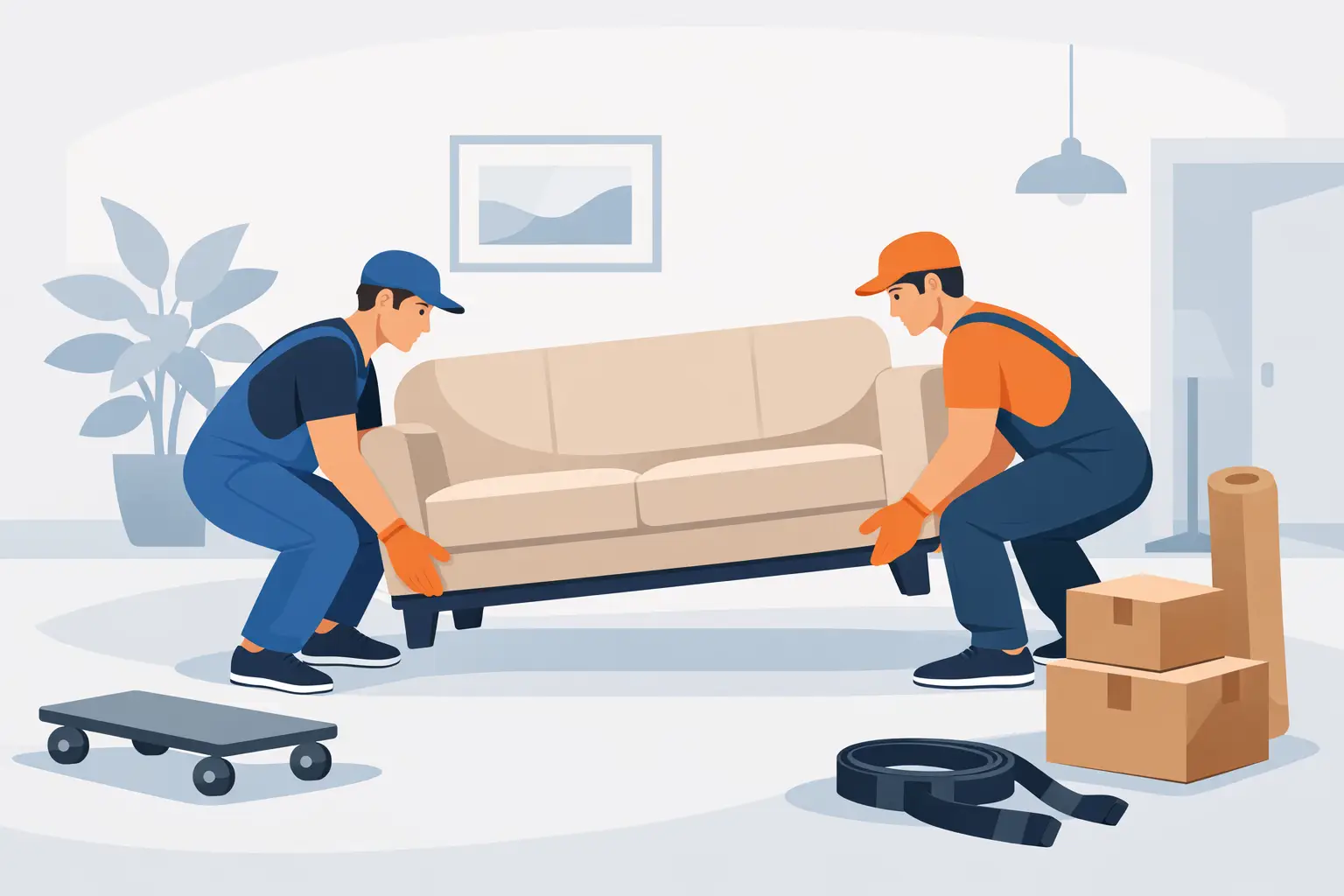
That dresser always looks manageable until it has to clear a tight hallway, protect the walls, and make it down a flight of stairs without hurting your back. If you're figuring out how to move heavy furniture, the real job is not just strength. It's planning, protection, and knowing when a piece is too risky to handle without help.
A lot of moving injuries happen because people rush the setup. They grab one friend, skip the padding, and try to muscle through awkward angles. Sometimes that works. More often, it leads to scraped floors, smashed fingers, damaged furniture, or a back strain that follows you long after moving day is over.
How to move heavy furniture without damaging your home
Start by treating the move like a route problem, not a lifting contest. Measure the furniture, then measure doorways, stairwells, corners, elevator openings, and any narrow spots on the way out. If a couch is technically shorter than the doorway but has to rotate through a cramped entry, you need to account for that turn.
Clear the path completely. That means rugs, shoes, small tables, cords, pet bowls, and anything else that can catch a foot or a furniture leg. Prop doors open if possible. Protect floors with moving blankets, cardboard, or floor runners in high-traffic spots. Wall corners and banisters are worth padding too, especially with bulky items that can swing wider than expected.
Before lifting anything, take off what you can. Remove drawers from dressers, shelves from bookcases, cushions from sofas, and legs from tables if the design allows it. Take photos of hardware and put screws, bolts, and brackets in labeled bags. A lighter piece is easier to control, and control matters more than raw strength.
Use the right equipment
Most heavy furniture moves get easier with basic tools. Furniture sliders are useful on hardwood, tile, and even low-pile carpet, though the type matters by surface. A four-wheel dolly helps with square, stable loads. An appliance dolly with straps gives better control for taller pieces. Lifting straps can help distribute weight, but they are not magic. If the item is too bulky, top-heavy, or fragile, straps can still put you in a bad position fast.
Moving blankets do more than protect wood finishes. They also improve grip and reduce impact when a piece brushes a wall or door frame. Stretch wrap helps keep drawers and doors shut, but don't wrap polished wood too tightly for long periods if heat is a factor.
If you're moving something especially heavy, like a solid wood armoire, gun safe, piano, commercial desk, or oversized sectional, this is where the job can shift from doable to risky. The weight is one issue. The shape and balance are usually the bigger problem.
Lift with control, not speed
When people ask how to move heavy furniture safely, they usually mean how to avoid getting hurt. The first rule is simple - do not lift with your back rounded and your arms extended. Get close to the item, bend at the knees and hips, keep the load tight to your body, and lift smoothly.
If two or more people are carrying, assign one person to call the move. That avoids the stop-start chaos that happens in tight spaces. Use simple commands like "lift," "lower," "pivot," and "stop." It sounds basic, but good communication prevents a lot of damage.
Take small steps. Do not twist while carrying weight. If you need to change direction, set the item down if possible and reset your grip. For stairs, the stronger or more experienced person should usually take the lower end, because that side carries more of the load. Move one step at a time and stop if the piece starts pulling away from your control.
Sliders, dollies, or carrying by hand?
It depends on the floor, the piece, and the route. Sliders are great for large items that can stay mostly level and move across a flat surface. Dollies save effort over distance, but they need stable balance and enough room to roll. Carrying by hand may be necessary in stairwells, tight turns, or uneven surfaces.
The mistake is using one method for the entire move. A dresser might slide across a bedroom, ride a dolly down a hallway, then need to be hand-carried through the front steps. Good moves usually involve transitions.
Watch for the problem items
Not all heavy furniture is equally hard to move. Some pieces are deceptively dangerous because they are awkward more than heavy.
Recliners are bulky and uneven. Mattresses are light compared to dressers, but they catch wind, bend badly, and block visibility. Large mirrors and glass-front cabinets can shift from manageable to broken in one wrong turn. Filing cabinets, especially if not emptied, become unstable quickly. Safes and stone-top furniture often exceed what most people should try without professional equipment.
Flat-pack furniture is another wildcard. Some pieces are light enough to carry but weak at the joints, so lifting from the wrong point can snap the frame. Older furniture has similar issues. Solid wood can be strong, but aged glue joints, loose legs, and brittle veneer need extra care.
When disassembly is the better move
If a piece barely fits, disassemble it before you force it. Bed frames, dining tables, sectionals, office desks, and shelving units often move more safely in sections. Yes, it adds time on the front end. It usually saves time compared to getting stuck in a stairwell or damaging the piece trying to shave a few minutes.
There is a trade-off. Some furniture does not reassemble well after repeated moves, especially lower-cost particleboard pieces. In those cases, you have to decide whether preserving the item is realistic or whether replacement is the better call.
When to stop and call movers
There is a point where doing it yourself stops being efficient and starts becoming expensive. If the furniture is oversized, going up or down multiple flights, moving through narrow turns, or valuable enough that damage would be a big loss, getting help is usually the smart move.
That is especially true if you're combining heavy furniture with a larger move. Loading a truck sounds straightforward until your heaviest items go in wrong, weight shifts in transit, and lighter pieces get crushed behind them. Experienced movers think about sequence, balance, padding, tie-downs, and home protection at the same time.
For customers using a rental truck, PODS, or U-Box, labor-only help can make a lot of sense. You keep control of the transportation side but bring in trained hands for the hard part. That's often the best middle ground for people who want to save money without gambling on injury or damage.
In places with older homes, tighter entries, and weather that changes fast, heavy-item moves can get more complicated than they look on paper. A snowy walkway in Spokane or a slick porch step in Coeur d'Alene changes the risk level right away. Conditions matter.
A practical setup for moving day
If you're handling the move yourself, get your setup right before the first lift. Wear closed-toe shoes with grip. Use gloves if they improve your hold, but not if they make you clumsy. Keep kids and pets out of the route. Have blankets, wrap, tape, sliders, and a dolly ready before you start.
Load the heaviest furniture into the truck first in most cases, but only if it can be secured well. Keep weight low and balanced over the axles. Stand mattresses upright only if they can be braced properly. Protect wood and upholstered surfaces from rubbing during transit, not just from direct impact.
If the item feels too heavy when you first tilt it, pay attention to that. Struggling at the start rarely gets better halfway through the move.
Move Forward LLC handles jobs like this every week, and the pattern is pretty consistent - the smoothest moves are the ones planned early, padded properly, and not left to guesswork.
Heavy furniture does not care how motivated you are. Respect the weight, protect the route, and make the smart call before a hard job turns into an expensive one.